
For Konkona Sen Sharma, textiles were never just fashion. Long before films or red carpets, there were handloom sarees in cupboards at home, cottons folded with care, and the quiet ritual of choosing a drape for a festival. That early memory — of cloth as story, not just clothing — is why her partnership with *Aadyam Handwoven* feels less like an endorsement and more like coming home.
Aadyam, the social enterprise from the Aditya Birla Group, works directly with weaver communities across India — from Varanasi to Bhuj, Pochampally to Kashmir. Their mission: keep handloom alive as both art and livelihood, connecting every weave back to the hands that made it.
At a recent gathering at Quorum, Mumbai, Konkona arrived in a kora silk cotton saree from Aadyam, handwoven in Varanasi. It wasn’t a styling choice. It was personal.
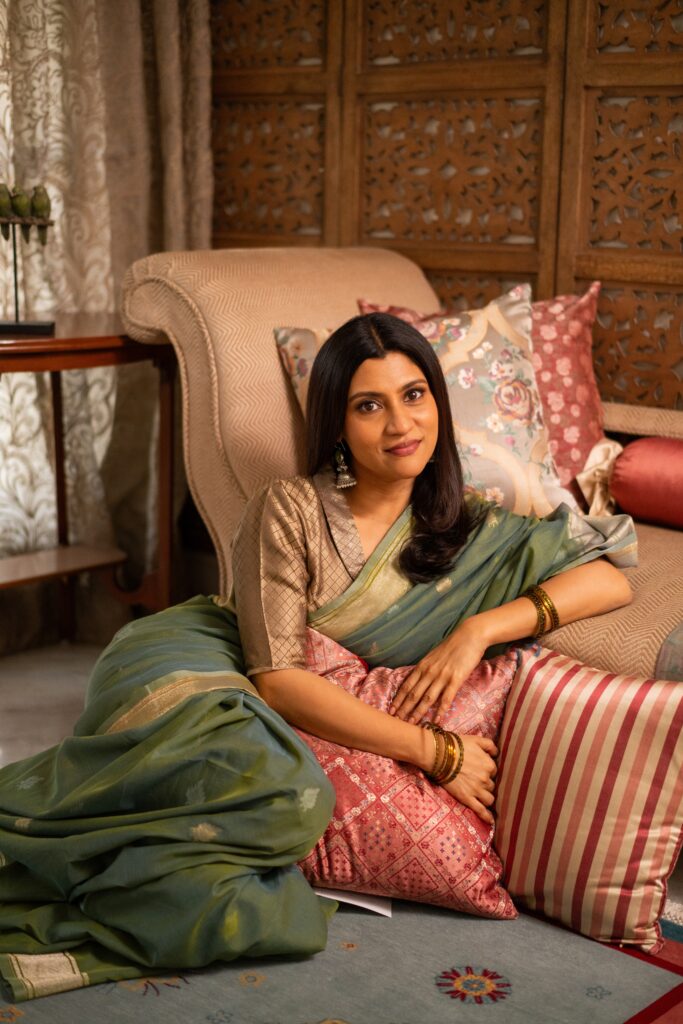
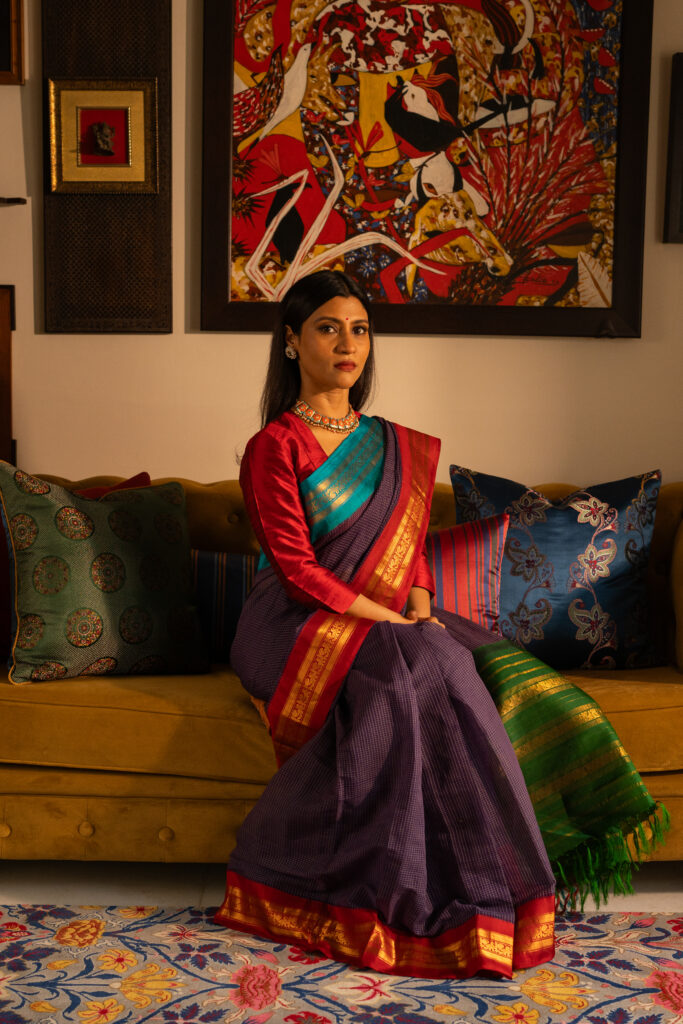
“I’ve grown up around handloom — watching it being worn, lived in, and passed down,” she says. “What moves me about Aadyam is that their textiles don’t feel removed from the maker. You can feel the human connection in them.”
In a time when luxury is being redefined by meaning, not just price tags, Konkona’s bond with Aadyam asks a bigger question: What if the most luxurious thing we can own is something made slowly, by hand, with someone’s name and story behind it?
In an exclusive interaction with ColleKTive, Konkana speaks about authenticity, slow luxury, and why a single saree can carry more than just thread. Excerpts from the interview:
What made you want to personally champion Aadyam, beyond a brand association?
Honestly, it was the specificity of what they do. It’s easy to say you support handloom, harder to actually build systems that make weavers’ livelihoods sustainable. Aadyam is doing the harder thing. They’re in the clusters, co-creating, season after season. That kind of consistency is rare, and it’s the only kind of support that actually means anything.
What does “slow luxury” mean in your own life?
Choosing fewer things that I genuinely love over many things I’m merely fine with. It applies to films I make, roles I take, objects I bring home. There’s a real satisfaction in owning something that was made carefully, that will last, that gets better with time.
Knowing these pieces take months to make, how does that change how you wear them?
It makes you more present in the wearing of it, I think. You’re aware that someone’s time and skill is woven into what you have on, quite literally. That shifts something. You stand a little differently in it. You’re less careless. And you think twice before discarding something, which is probably the most sustainable instinct of all.
Why should a brand like Aadyam support culture beyond clothing?
Because textiles have never existed in isolation. A weave carries the music of a region, its architecture, its relationship with nature, its mythology. You can’t fully understand Banarasi without understanding Varanasi. You can’t separate a Kashmiri weave from its landscape. So when Aadyam extends into music, performance, literature, that’s not a distraction from craft. That’s the full picture of what craft actually is.
Is there an Aadyam piece you’re especially attached to? What’s its story?
It would have to be the Banarasi Jamdani. I wore one for the campaign, and it just stayed with me. There’s something very quiet about it—it doesn’t shout, but the more you look, the more you see. The motifs almost feel like they’re floating, and knowing how much time and care goes into each one makes it feel really personal. I keep going back to it. It feels like something you don’t just wear, you sort of grow into.